The temples of North Guwahati and their rich history are often overlooked. While outsiders may associate Guwahati primarily with Kamakhya Temple, those eager to truly explore the city should visit these lesser-known temples to gain insight into the area’s historical significance.
North Guwahati in Historical Perspective
Have you ever heard of the name “Durjaya”? Well, that is the ancient name of North Guwahati (the part of Guwahati which lies on the northern side of the river Brahmaputra). Durjaya was the ancient capital of the Pala dynasty which ruled Assam during 900 CE–1100 CE. Durjaya was the capital on the banks of the Brahmaputra and surrounded it with a rampart and a strong palisade, hence, they named it Durjaya (meaning impregnable). Before the Palas, the kings of Varman dynasty ruled over North Guwahati. During the rules of these two dynasties, many wealthy merchants lived there in safety.
During the later phase of history (from 1600 CE onwards), the Ahoms made several fortification around the city to check Mughal aggression. Many battles were fought between Mughals and Ahoms around North Guwahati. In addition, the Ahom kings have constructed many temples in the city.
Present North Guwahati possesses temples, roads, bridges, fortifications, and moats which are of ancient origin. The western part of the town is called Sil-Sako because it still contains a small stone-built bridge over a stream. The eastern part is known as Rajaduar, which shows that the Raja’s palace was there. The second copper plate of Dharma Pala was found in the village of Rang Mahal about two miles to the north of Rajaduar. This is another indication that the capital was then at North Guwahati. It comes as no surprise then that North Guwahati is home to several historical temples like the Aswaklanta, Dirgheswari, Manikarneswar, Rudreswar and the Doul Govinda. Here is the details of all the temples in North Guwahati
Aswaklanta Temple
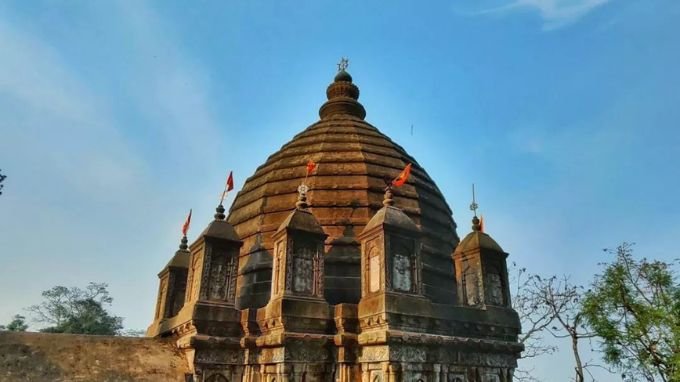
Aswaklanta Temple also known as Aswakranta Devalaya is an important temple constructed by the Ahom king Swargadeo Siva Singha in 1720. It is located Majgaon area of North Guwahati. Even though the history claims that the Aswaklanta Temple was constructed by Siva Singha, there existed an ancient temple at the same site. King Siva Singha built upon the ruins of that ancient temple which is evident by that fact that the the idols and stone carving shows features of medieval era.
During the massive earthquake of 1897, a major portion of this temple was demolished, but Lord Curzon, the then Viceroy of British India, renovated the temple.
As per one legend, when Krishna was searching for the demon king Narakasura, on the way, Krishna’s horse got tired at this spot where now Aswaklanta Temple is located. Aswa means ‘horse’ and klanta means ‘tired’ in Assamese. Therefore, the place got the name Aswaklanta.
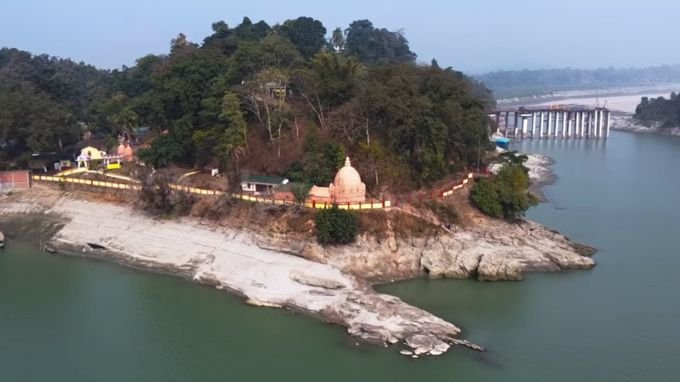
Basically, there are two temples within the main premises. One of the temples is located at the foothill — the Kurma Janardan Temple and the other — the Anantasayini Vishnu Temple, is positioned at the top of the hillock. The main garbhagriha of the Anantasayi Temple houses the unique image of Anantasayi (Vishnu lying on the Ananta snake). This idol is carved out of black stone and the significance of this particular idol is that it goes back to the 11th century.
The Vishnu pad (footprint) here is an interesting feature. It is believed that this is the footprint of Lord Vishnu on the foothills of the hillock. There are two rock cut caves at the base of the hill. Earlier, there was a Kunda or a sacrificial space in the spot, which has been washed away by the River Brahmaputra.
On the day of Ashokastami (falls in the first week of April), a large number of people come to Aswaklanta to take bath in the river Brahmaputra.
Dirgheswari Temple
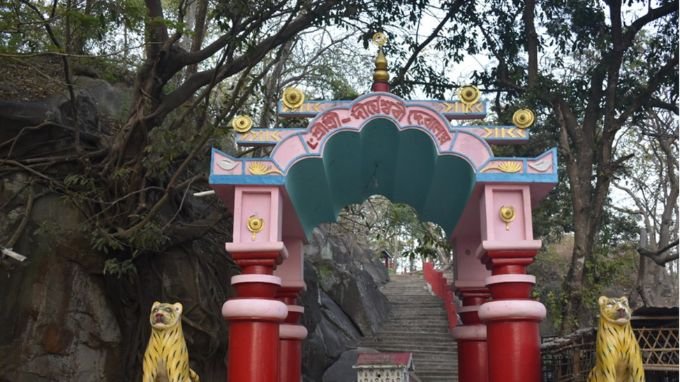
This temple, situated on the Sitachal Hills, is considered the second most holy place in Assam after Kamakhya. Dedicated to Goddess Durga, it was built by the Ahom king Swargadeo Siva Singha in the year 1714. Since ancient times, Dirgheswari Temple or Dirgheswari Dewalaya was a prominent place of worship for the followers of the Shakti cult of Assam.
It is said that when Sati, the wife of Lord Shiva died, Lord Shiva, in His grief, carried her dead body around the world. In order to pacify Shiva, Lord Vishnu instructed His Sudarshan Chakra to cut Sati’s body into several pieces. It is believed that while Sati’s yoni fell on Nilachal Hill, one of her limbs fell on Sitachal Hill. Hence, the place is considered sacred by the people.
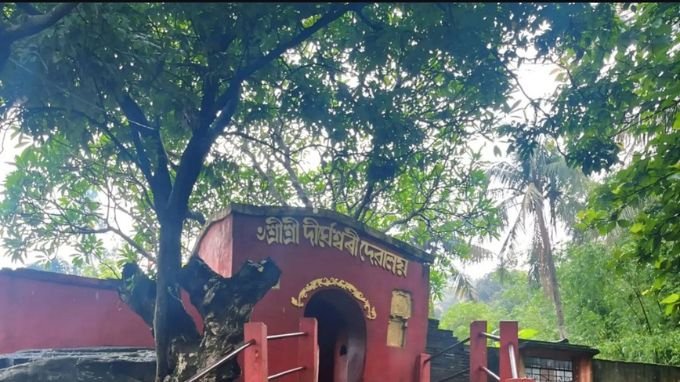
People of the locality celebrate Madan Chaturdashi when a divine marriage is solemnised between Devi Dirgheswari and Lord Shiva in the Manikarneswar Temple nearby. People carry Devi Dirgheswari to Manikarneswar Temple (listed below) in a procession during the day and bring her back to Sitachal at the end of the day. Besides, Durga Puja is celebrated with much religious fervour. The idol of Goddess Durga is situated insde the Garbhagriha of the temple.
Manikarneswar Temple
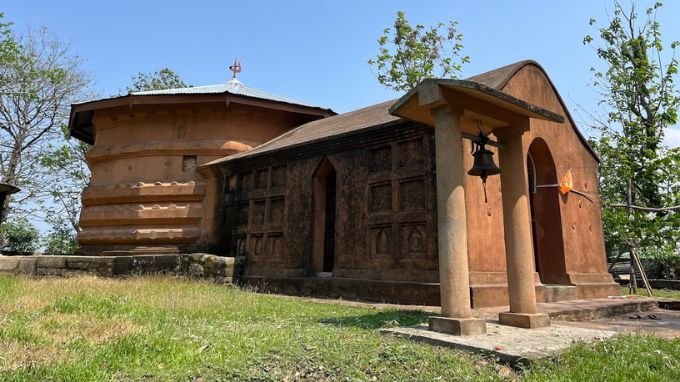
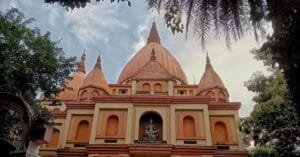
This is a star-shaped temple over a hillock (locally known as Manikhalya Hill) near Rajaduar. About 100 steps lead to the temple compound. It is one of the oldest temples of the Pala Dynasty built during tenth to 11th century AD. Subsequently it was renovated by the Ahom king Swargadeo Rajeswar Singha in 1755 AD.
During the military preparations of Ahom king Rudra Singha against the Mughals, this post came to be identified as Rajaduar, or the king’s gateway. The king could reach the Brahmaputra for any naval journey from his pleasure house (Rang Mahal), about three kilometres to the north of the river, only through the pass cut out between the hillocks of Manikarneswar and Chandra Bharati Mandap. Presently this is the road taken by the devotees to and from the ferry approach on the north bank. The Manikarneswar Hill extends its tailbone to the northeast direction to reach the huge rock known as the ‘Kanai Boroxi Boa Xil’. It is believed to have served Kanai (Lord Krishna) as the seat for angling in the river. Only a three-minute walk from the temple premises, it is one of the most beautiful viewpoints of the North Guwahati area.
Rudreswar Temple
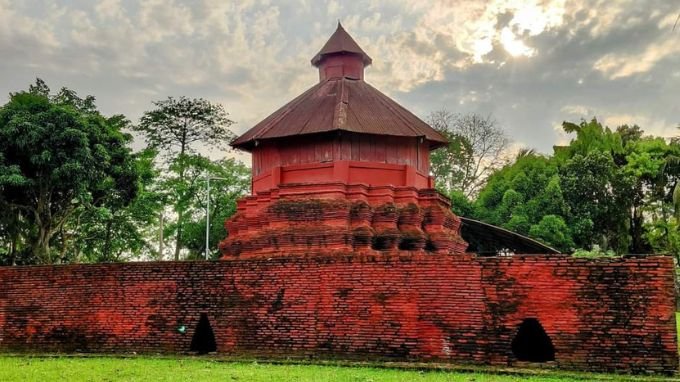
The Rudreswar (Shiva) Temple was built by Ahom king Swargadeo Pramatta Singha (1744 to 1751) in honour of his father Swargadeo Rudra Singha in the year 1749. It is located in the Manikarneswar area. The village surrounding the temple is also known as Rudreswar. The temple is a fine example of the mixed style of Ahom and Mughal architecture. The temple has underground chambers whose entrances are present at the front side of the temple.
Doul Govinda Temple
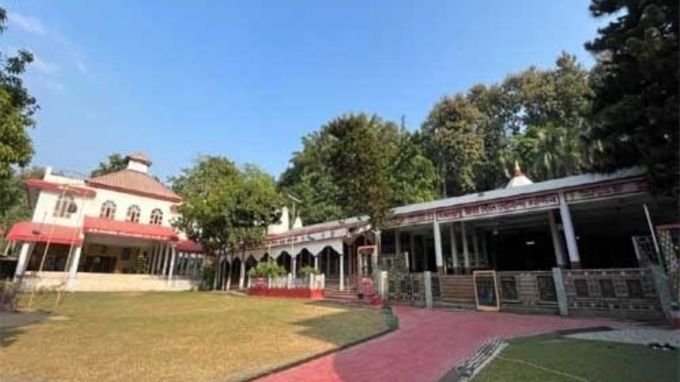
The Doul Govinda Temple, dedicated to Lord Krishna, is situated on the foothills of the Chandra Bharati Hill at Rajaduar. It was built by the Ahom king Pramatta Singha (1744 – 1751) in the memory of his father in 1749 CE. Though the original temple was built about 150 years ago, the structure was renovated around 1966. Several stories also exist regarding this deity and how ‘He’ was brought here by late Ganga Ram Barooah from a place called Sandhyasar near Nalbari.
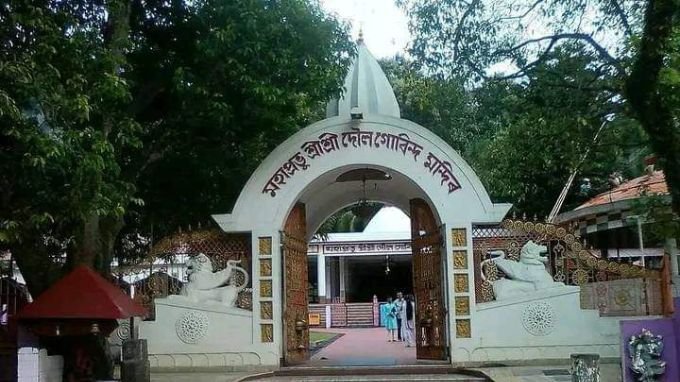
Madan Kamdev Temple
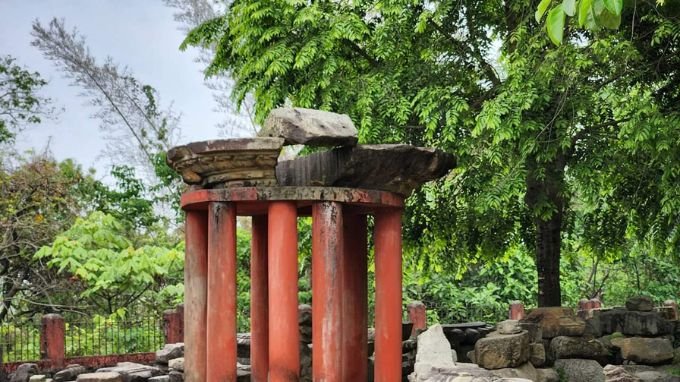
Madan Kamdev Temple, popularly known as the Khajuraho of Assam, is a treasure house of Assam. Every year thousands of tourists visit the place to explore Madan Kamdev temple and its surroundings. Madan Kamdev temple is situated in a small town called Baihata Chariali (30 km from Guwahati) in the Kamrup district of Assam.
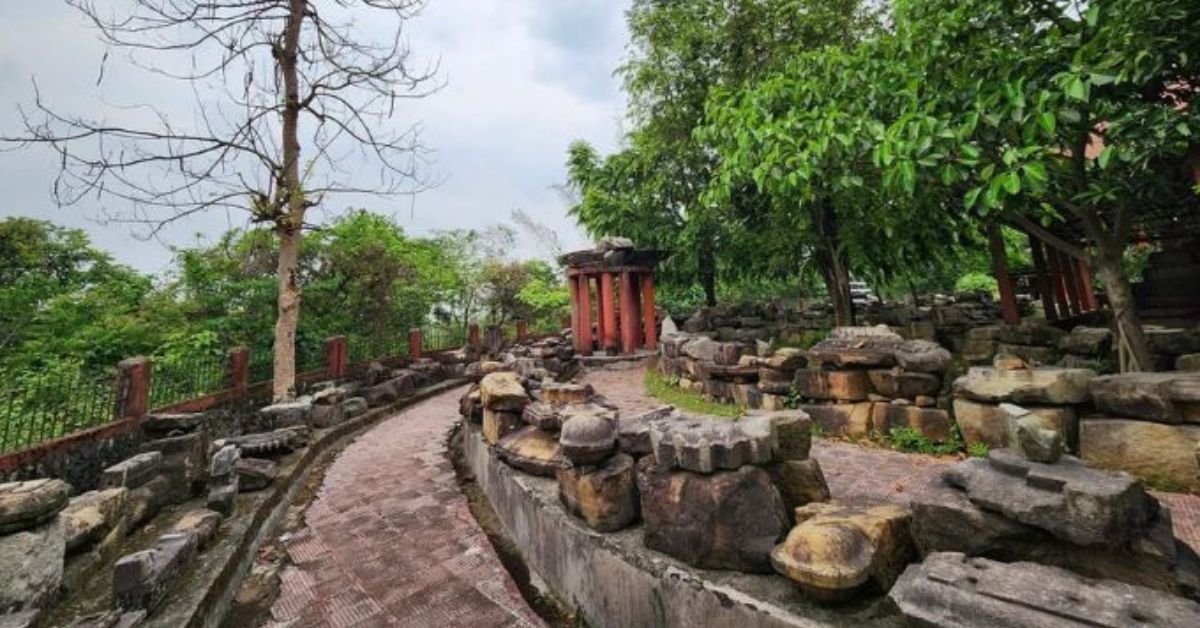
This archaeological site comprises of a group of ruined temples and sculptures. Madan Kamdev is the main temple, with ruins of other huge and small temples scattered around it (near Jalpeshwar and Narasinha Parvat). There are as many as one dozen temples of both stone and brick masonry work on this site, but all these temples are found in a ruined state.
Hayagriva Madhava Temple
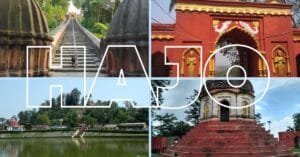
The Hayagriva Madhava Temple, perched atop Manikuta hill at a height of nearly 300 feet, is the principal religious centre of Hajo. Dedicated to Lord Vishnu’s Hayagriva avatar, depicted with a horse’s neck, the temple is deeply rooted in Hindu mythology. According to the Kalika Purana, Lord Vishnu assumed the Hayagriva form to retrieve the stolen Vedas from demons Madhu and Kaitabha, killing them at this very site.
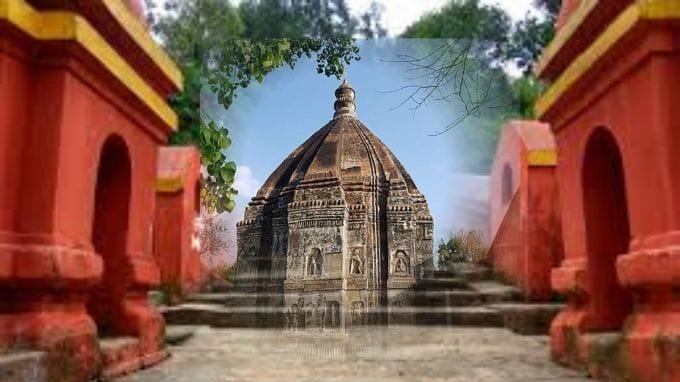
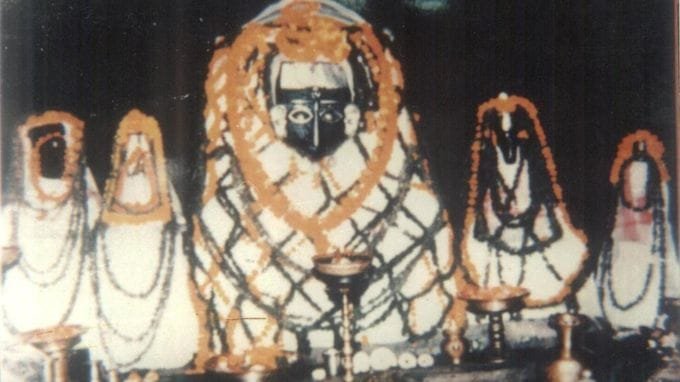
The Hayagriva Madhava Temple’s architecture follows the Nagara style with Pancharatra method, showing a unique blend of Hindu and Buddhist art in its vimana, antarala and mandapa. The sanctum houses idols of Hayagriva Madhava, Budha Madhava, Chalanta Madhava, Vasudeva and Garuda. The Chalanta Madhava idol, associated with a legend of movement underground, is ceremonially taken out during festivals, generating immense devotional fervour. Its base features 124 intricately carved elephants symbolising strength and support, while outer walls depict Vishnu’s ten avatars, including Buddha as the ninth avatar.
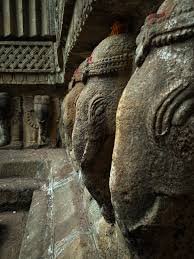 Certain motifs of the original work, particularly a row of caparisoned elephants relief, encircling the building, appear to be specimens of buddhist architecture. The elephant motif is identical to the decorative style of the cave temple at Ellora. There is another temple nearby, It is also called Daulgriha and was constructed by Ahom King Pramatta Singha.
A number of stone images another things mostly in demolished condition are lying scattered in the precinct of the temple.Among these a few stone slabs with lion motif are the most remarkable pieces of architecture. These are said to the parts of an Ashokan pillar installed to the original Buddhist chaitya. Another piece of art is one Simhasana. The simhasana was decorated with winged lions made of ivory, in its four corners. Today the simhasana is not there but the broken pieces are lying unnoticed in an interior room of the temple.
Below the temple is a large pond named Apurnakumbha, where devotees wash their hands and feet before entering. 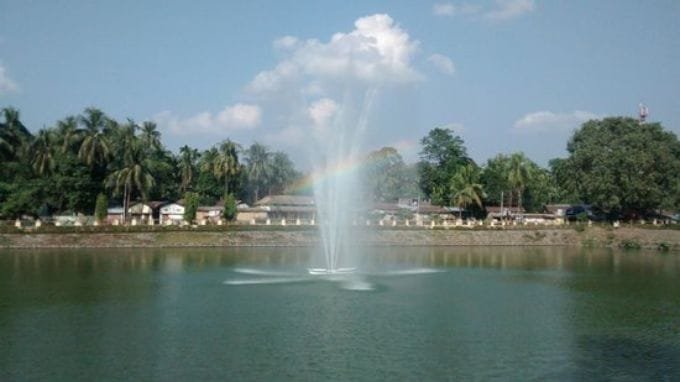 The fish and tortoises in this pond are considered symbols of Vishnu’s Matsya and Kurma avatars. At the temple entrance, a Hanuman statue and the lion gate enhance its artistic beauty.
Daily morning puja, evening aarti and offerings during special festivals are traditionally observed.During Janmashtami, Dolotsav and Magh Bihu, the gathering of devotees creates a festive atmosphere. The hilly surroundings and the natural beauty of the Brahmaputra evoke profound peace and spirituality in pilgrims’ minds. The temple management is in the hands of local families who have maintained this tradition gen-erationally. Their devotion and faith preserve the temple’s sanctity. Some folk-lores associated with the temple’s history deepen its mythological significance. For instance, one legend says the idols first appeared in a dream, leading to the temple’s construction here. This combination of as-pects establishes the Hayagriva Madhava Temple as the spiritual heart of Hajo.