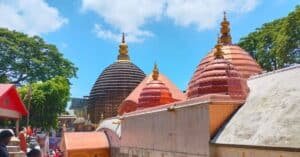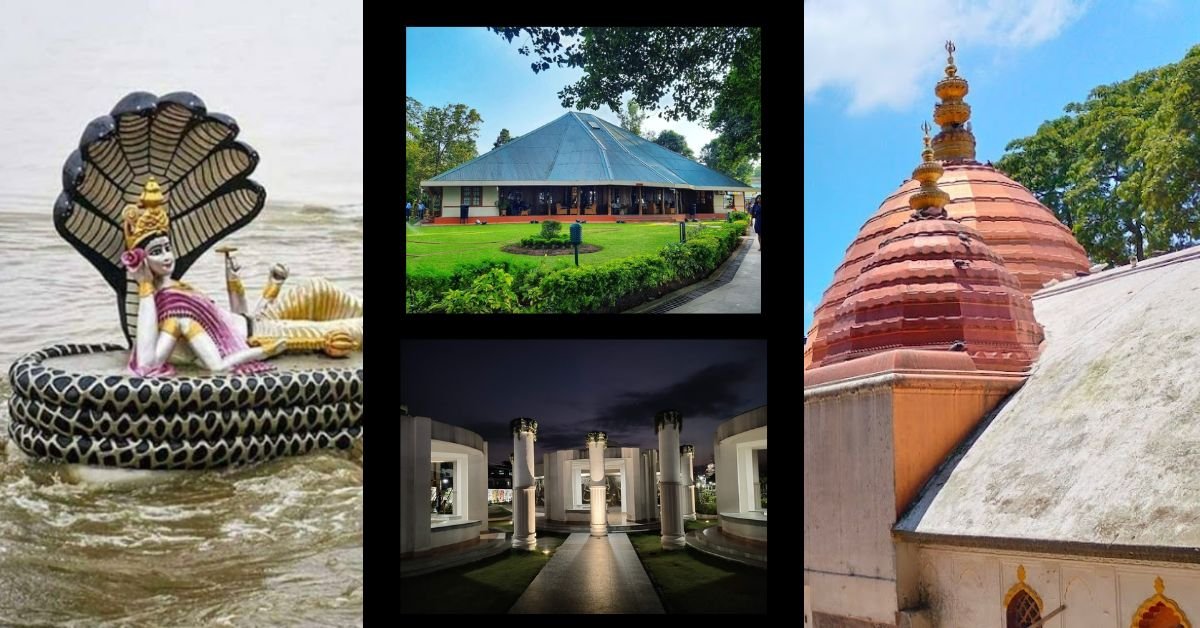
Close to Guwahati lies the ancient Kamakhya Temple, a pilgrimage site dating back to the 8th century, renowned for its tantric rituals and architectural splendor. Just a short drive away, the Madan Kamdev ruins (also known as Khajuraho of Assam) offer a glimpse into Assam’s medieval era, featuring intricate carvings and sculptures from the 9th and 10th centuries. Another historical gem is the Umananda Temple, situated on the world’s smallest river island in the Brahmaputra. History enthusiasts will also appreciate Hajo, a town known for its sacred sites like Hayagriva Madhava Temple and Powa Mecca, which illustrate a harmonious blend of Hinduism, Buddhism, and Islam. Each of these historical places near Guwahati provides a deep dive into the region’s diverse historical and cultural narratives, making Guwahati a compelling destination for those intrigued by the past.
Kamakhya Temple of Guwahati
The Kamakhya Temple of Guwahati, located on the southern bank of the Brahmaputra river above the Nilachal Hills, is a historic Shakti pith (shrine of divine power). The Kamakhya Temple of Guwahati is one of the oldest prehistoric temples in India. In ancient times, the temple was known for tantric practices, human and animal sacrifices and various other occult practices which later shifted to Mayong in Assam. The story of Kamakhya Temple is related to Lord Shiva and his wife Devi Sati. The story has captured peoples mind so amazingly that many believe people visit because this powerful story. (you can read the story here).

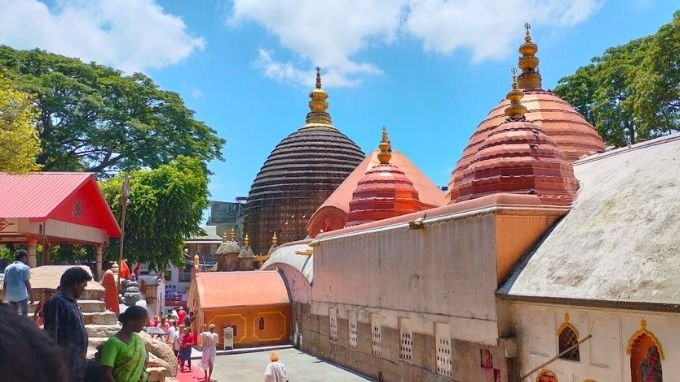
You can visit this temple to re-live its rich history. However, being the most visited historical places near Guwahati, be aware that the temple is often crowded, and the queues can be quite long. For information on booking tickets for Kamakhya Temple, refer to this blog. Additionally, there are other historical sites near Kamakhya Temple worth exploring.
Madan Kamdev Temple and Other Ancient Ruins
Nestled in the tranquil landscape of Baihata Chariali, about 30 km from Guwahati, Madan Kamdev Temple is a hidden gem of Assam. Revered for its intricate Nagara-style architecture and explicit sculptures, it has earned the title “Khajuraho of Assam.” Dating back to the 11th-12th century A.D., this temple complex is a testament to the architectural brilliance of the Pala dynasty. It is the only historical places near Guwahati where temple ruins are beautifully preserved in an in-situ museum.

Although no inscriptions directly link the temple to the Palas, its detailed carvings and designs echo their artistic influence. The site has endured significant damage, possibly from a 1548 earthquake or the destructive invasion by Kalapahar in 1568. Despite this, the temple remains a captivating relic of ancient craftsmanship.
Beyond its historical allure, Madan Kamdev’s surroundings offer a natural paradise, complete with scenic hillocks, natural ponds, and breathtaking river views. This serene environment makes it a popular spot for winter picnics and nature excursions.
The temple’s cultural and religious significance draws a diverse array of visitors. While the majority of Hindu visitors come for its spiritual importance, Muslims also frequent the site for relaxation and as an archaeological attraction, showcasing the site’s role as a symbol of communal harmony.
Saraighat War Memorial Park
Even those with minimal knowledge of Assam are familiar with the Battle of Saraighat and the heroics of Lachit Barphukan. This battle should be remembered by every proud Indian, as the formidable Mughal forces were humiliated by the Ahom forces of Assam. Consequently, Assam successfully preserved its independence

The Saraighat War Memorial Park, dedicated to preserving and promoting the legacy of the Battle of Saraighat (1671 A.D.), embodies this history.
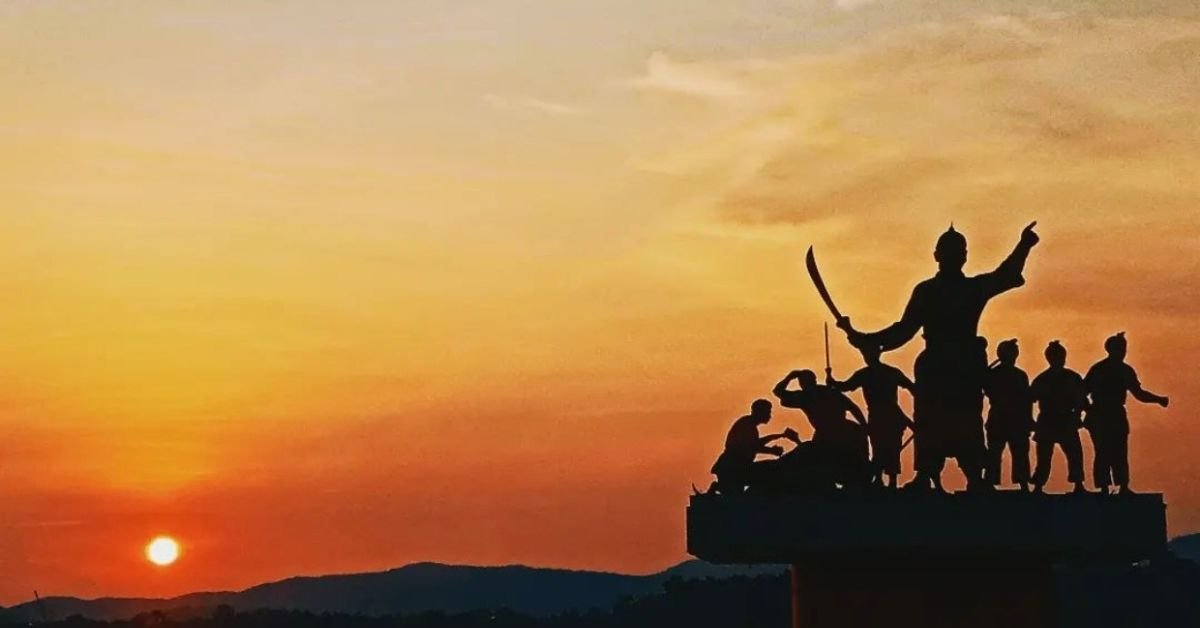
Located at Agyathuri on the northern bank of the Brahmaputra River, the park is 15 km from Jalukbari, Guwahati. It features four bronze statues of Ahom warriors in combat poses and a bronze plaque narrating a segment of the Saraighat battle. At the park’s entrance, two additional fiberglass statues of Ahom warriors, created by sculptor Birendra Sinha and a team from Shantiniketan, welcome visitors.

Poa Macca and Hayagriva Madhab Mandir Complex
Both Poa Macca and Hayagrib Madhav Mandir is situated at the same site. It reflects the harmonious blend of Hinduism, Buddhism, and Islam in Assam. It is located at Hajo, a small town near Guwahati. It is 24 kms away from Guwahati
Poa Macca (Mecca)
Poa Macca (Mecca) is a pilgrimage site. It is located atop a hill known as Garurachal hill. It is the tomb of saint Giasuddin Auliya (a popular sufi saint in Assam). It is believed that by offering prayers here the faithfuls gain one fourth of the spiritual enlightenment of what could be gained at Mecca. Hence the name – “poa” meaning one-fourth of a kg in Assamese.

It is also believed that to lay the foundation of this dargah, a poa (250 grams) of sand was brought from Mecca (the holy land of Islam in Saudi Arabia). That is why it is known as Poa Mecca. It was built in 1657 AD by Sujauddin Muhammad Shah. However, it fell into ruin over time. It was later rebuilt by the British. Both hindus and muslims visit this dargah.
Hayagrib Madhav Mandir
The Hayagriva Madhava Temple, perched atop Manikuta hill at a height of nearly 300 feet, is the principal religious centre of Hajo. Dedicated to Lord Vishnu’s Hayagriva avatar, depicted with a horse’s neck, the temple is deeply rooted in Hindu mythology. According to the Kalika Purana, Lord Vishnu assumed the Hayagriva form to retrieve the stolen Vedas from demons Madhu and Kaitabha, killing them at this very site.
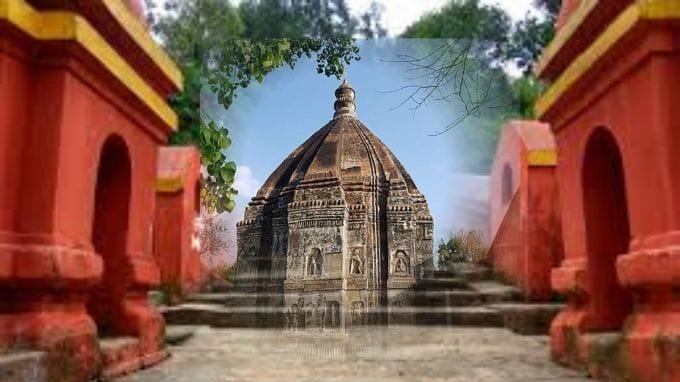
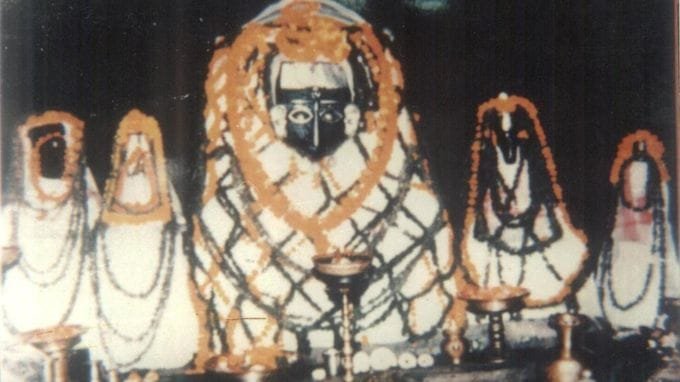
The Hayagriva Madhava Temple’s architecture follows the Nagara style with Pancharatra method, showing a unique blend of Hindu and Buddhist art in its vimana, antarala and mandapa. The sanctum houses idols of Hayagriva Madhava, Budha Madhava, Chalanta Madhava, Vasudeva and Garuda. The Chalanta Madhava idol, associated with a legend of movement underground, is ceremonially taken out during festivals, generating immense devotional fervour. Its base features 124 intricately carved elephants symbolising strength and support, while outer walls depict Vishnu’s ten avatars, including Buddha as the ninth avatar.
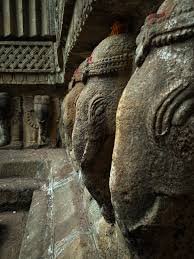 Certain motifs of the original work, particularly a row of caparisoned elephants relief, encircling the building, appear to be specimens of buddhist architecture. The elephant motif is identical to the decorative style of the cave temple at Ellora. There is another temple nearby, It is also called Daulgriha and was constructed by Ahom King Pramatta Singha.
A number of stone images another things mostly in demolished condition are lying scattered in the precinct of the temple.Among these a few stone slabs with lion motif are the most remarkable pieces of architecture. These are said to the parts of an Ashokan pillar installed to the original Buddhist chaitya. Another piece of art is one Simhasana. The simhasana was decorated with winged lions made of ivory, in its four corners. Today the simhasana is not there but the broken pieces are lying unnoticed in an interior room of the temple.
Below the temple is a large pond named Apurnakumbha, where devotees wash their hands and feet before entering. 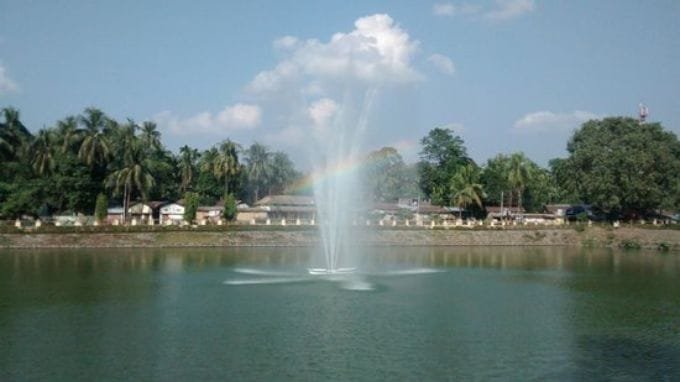 The fish and tortoises in this pond are considered symbols of Vishnu’s Matsya and Kurma avatars. At the temple entrance, a Hanuman statue and the lion gate enhance its artistic beauty.
Daily morning puja, evening aarti and offerings during special festivals are traditionally observed.During Janmashtami, Dolotsav and Magh Bihu, the gathering of devotees creates a festive atmosphere. The hilly surroundings and the natural beauty of the Brahmaputra evoke profound peace and spirituality in pilgrims’ minds. The temple management is in the hands of local families who have maintained this tradition gen-erationally. Their devotion and faith preserve the temple’s sanctity. Some folk-lores associated with the temple’s history deepen its mythological significance. For instance, one legend says the idols first appeared in a dream, leading to the temple’s construction here. This combination of as-pects establishes the Hayagriva Madhava Temple as the spiritual heart of Hajo.

The outer walls of the shrine are adorned with relief sculptures depicting the ten incarnations of Vishnu. A particularly remarkable feature of the temple is the continuous row of elephant carvings at the base of the walls, reminiscent of the stone-cut temples at Ellora.
Some Buddhists of the region believe that it is the place where a form of Buddha attained Nirvana. That is why many Buddhists visit this place, especially on Buddha Purnima. As a result, it is one of the most unique historical places near Guwahati.
Read this detailed blog to know more about Hajo town, Hayagriva Madhav Temple and Poa Mecca
Guwahati War Cemetery
For enthusiasts of World War II history, the Guwahati War Cemetery offers a compelling glimpse into the wartime narratives of this region. Nestled in the Silpukhuri area at the heart of Guwahati city, the cemetery is easily reachable via Navagraha Road, which leads towards the Navagraha Temple. The route is uphill but well-maintained, accessible even for four-wheel vehicles.

The Guwahati War Cemetery commemorates 486 Commonwealth servicemen from World War II, with 25 unidentified burials among them. Additionally, it includes 24 Chinese war graves and two non-war graves. Unique among India’s nine such cemeteries, it also holds the graves of Japanese soldiers, totaling 521 graves to date. Maintained by the Commonwealth War Graves Commission, based in the UK, the cemetery features detailed records and stories of the fallen soldiers in its office, making it a treasure trove for history buffs.
Dighalipukhuri War Memorial
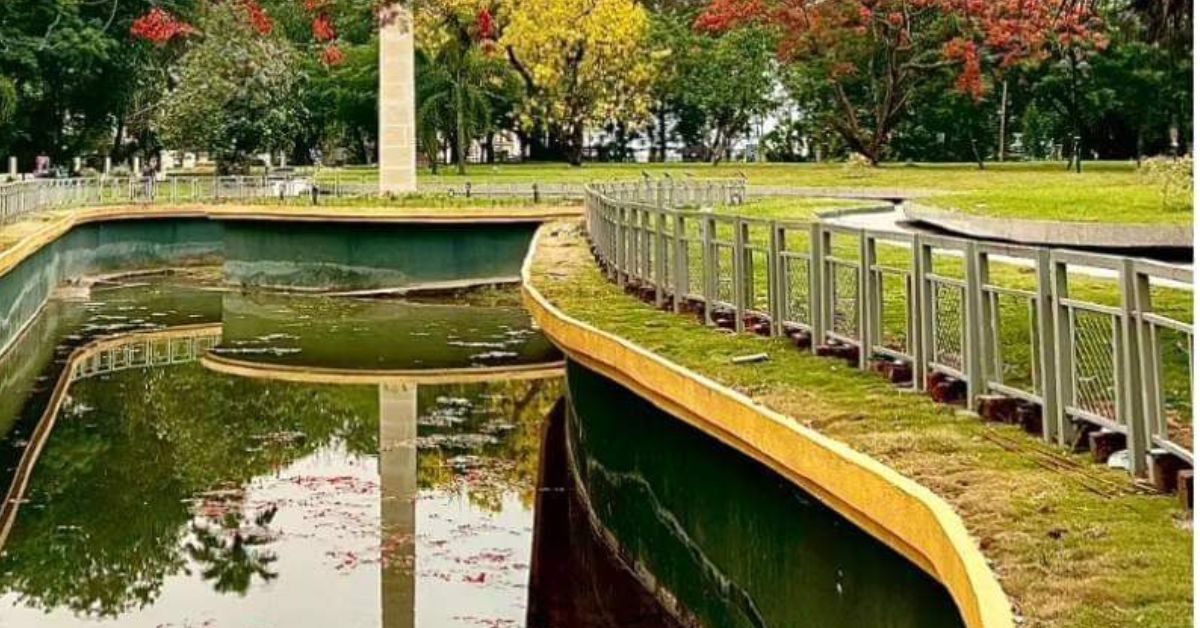
Dighalipukhuri is popular hang out spot in Guwahati and is considered one of the most romantic places for couples in Guwahati. It is near Panbazar and Reserve Bank area. Dighalipukhuri actually means a long pond in Assamese. A park area has been developed around the pond to have food strret, childrens park, water boating (inside the pond), dining and other handout places. The War Memorial is situated on the northside of the park (towards Guwahati high court side).
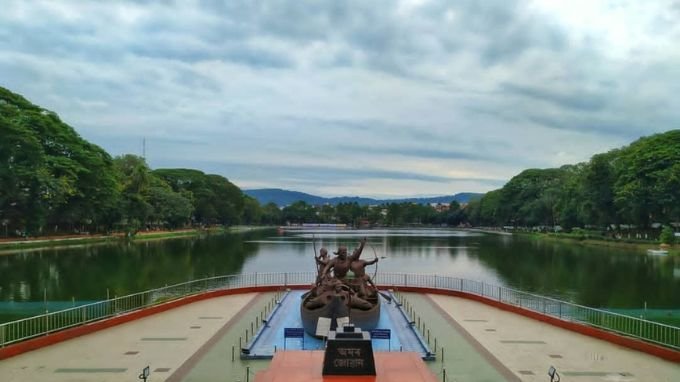
Dedicated to the memory of those who sacrificed their lives for the nation, the War Memorial at Dighali Pukhuri offers a tranquil environment ideal for relaxation with family and friends. The site features impressive exhibits, including a mighty army tank and a MiG-27 fighter jet donated by the Indian Army and Air Force, respectively, both of which saw action during wartime.
The memorial also boasts a replica of the iconic ‘Amar Jawan’ monument, along with fascinating depictions of the historic Battle of Saraighat. A surface-to-surface P20 missile, contributed by the Indian Navy, adds to the array of military artifacts. Additionally, the memorial showcases scenes from significant conflicts such as the Kargil War, the 1971 attack on Karachi by the Indian Navy, and the Sino-Indian War.
Kanai Boroxi Boa Xilalipi

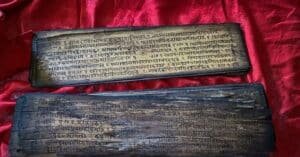
Located 25 km from Guwahati, the Kanai Boroxi Boa Xilalipi site is home to a remarkable rock-cut Ganesh sculpture and geometric inscriptions. The site features three significant stone inscriptions. The first, written in Sanskrit, details the Turkish invasion of 1205. The other two inscriptions, composed in Assamese and Devanagari scripts, describe the wars between the Ahoms and the Mughals. These inscriptions are etched on large stones situated in the area. Notably, the site contains the earliest Assamese inscriptional evidence, with many scholars considering these texts as precursors to the modern Assamese language.